Views: 7 Author: Site Editor Publish Time: 2026-01-12 Origin: Site
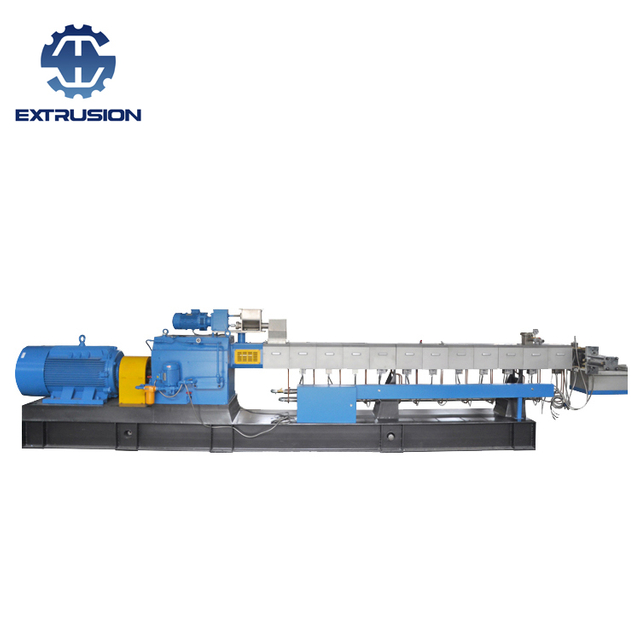
When selecting an extruder, most buyers focus primarily on the screw and barrel. While these are critical, a high-performance extrusion system depends on several other components that directly affect output, energy efficiency, stability, and long-term operating costs. Understanding these factors will help manufacturers choose the right extruder for their specific production requirements.

1. Screw Speed: The Core Driver of Extrusion Output
Screw speed is one of the most decisive factors influencing extruder productivity. Increasing screw speed not only boosts throughput but also improves plasticization when properly engineered.
Traditionally, higher output was achieved by increasing screw diameter. However, extrusion is not simple conveying—the screw must also compress, mix, shear, and melt the polymer. Larger diameters do not necessarily guarantee better mixing or plasticization at the same rotational speed.
Modern extruder design emphasizes higher screw speeds:
Conventional extruders: 60–90 rpm
Modern standard extruders: 100–120 rpm
High-speed extruders: 150–180 rpm
Higher speeds increase torque demand, which must be addressed through advanced screw materials, optimized geometry, and reduced extrusion resistance. Proper screw design allows higher rpm while maintaining mechanical safety and melt quality.
2. Screw Design: Structure Determines Performance
Screw geometry is just as important as screw speed. High-speed, high-efficiency screws are specifically designed to perform optimally at elevated rpm.
At low speeds, these screws may show weaker plasticization.
At their designed operating speed, they deliver both high output and excellent melt homogeneity.
Simply increasing screw speed without matching screw design violates basic extrusion principles and will not succeed in practice.
3. Barrel Structure and Feeding Zone Control
Barrel design—especially in the feeding section—plays a critical role in extrusion stability.
Modern extruders often use:
Water-jacketed feed sections
Advanced electronic temperature control systems
Proper feed zone temperature ensures sufficient friction between pellets and the barrel wall:
Too hot → premature softening, reduced friction, lower output
Too cold → excessive torque, unstable startup, motor overload
Precision sensors and automatic control systems help maintain the barrel temperature within the optimal processing window.
4. Gearbox: Efficiency Over Size
For extruders with the same screw diameter, high-speed models require higher motor power but lower reduction ratios. This results in:
Larger gear modules
Higher load capacity
Better mechanical efficiency
When output is calculated per unit gearbox weight, high-efficiency extruders outperform conventional designs. This means lower manufacturing cost per unit of production capacity, despite higher nominal motor power.
5. Motor and Drive System: Power vs. Energy Efficiency
High-speed extruders require significantly larger motors:
High-speed 65 mm extruder: 55–75 kW
High-speed 75 mm extruder: 90–100 kW
High-speed 90 mm extruder: 150–200 kW
Although installed power is higher, energy consumption per kilogram of output is lower. For example:
Conventional 90 mm extruder:
180 kg/h, 75 kW → 0.42 kWh/kg
High-speed 90 mm extruder:
600 kg/h, 150 kW → 0.25 kWh/kg
This represents a reduction of about 40% in energy consumption per unit output.
In addition, modern vector frequency inverters (VFDs) provide:
Precise speed and torque control
Superior low-speed performance
Significant long-term energy savings compared to traditional DC drive systems
6. Heating System: Lower Energy Than You Think
Heaters mainly consume power during startup. During steady production:
Most melting energy comes from mechanical shear
Heater duty cycles are low
High-speed extruders often use smaller barrels with reduced heating surface area, further lowering heating energy consumption compared to large-diameter traditional extruders.
7. Vibration Control: Protecting Equipment and Lifespan
High-speed operation increases vibration risk, which can shorten equipment life if not properly managed.
Effective vibration control includes:
High-quality motors and gearboxes
Rigid, heavy machine frames
Precision machining and assembly
Accurate shaft alignment between motor and gearbox
A well-designed extruder can operate stably without anchor bolts, relying on frame rigidity and mass to suppress vibration.
8. Instrumentation and Control Systems
Extrusion is essentially a “black box” process. Since the internal state cannot be directly observed, instrumentation is critical.
Advanced, intelligent, and user-friendly control systems allow operators to:
Monitor torque, pressure, temperature, and speed
Respond quickly to process deviations
Achieve stable production and consistent product quality
Conclusion
When choosing an extruder, focusing solely on the screw and barrel is not enough. Screw speed, screw design, barrel temperature control, gearbox configuration, motor and drive system, vibration suppression, and intelligent instrumentation all play decisive roles.
A well-balanced, high-speed, high-efficiency extruder delivers:
Higher output
Lower energy consumption per kilogram
Better melt quality
Longer equipment lifespan
Understanding these components helps manufacturers make informed investment decisions and achieve sustainable, cost-effective extrusion performance.

NANJING HAISI is professional manufacturer of Plastic Extruder Machine, we supply Twin Screw Extruder, Single Screw Extruder, Plastic Recycling Extruder, Two Stage Extruder, Lab Scale Extruder, Mixing and Feeding Machine, Cooling and Pelletizing Machine, Crushing Machine and so on.