Views: 10 Author: Site Editor Publish Time: 2025-12-01 Origin: Site
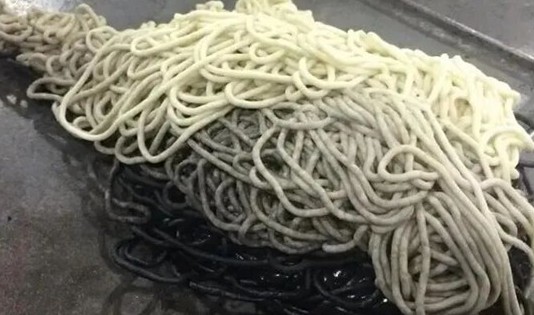
In modified plastic production, screw cleaning is a critical yet often overlooked process. Residual carbonized materials, pigments, or cross-contamination between polymers can lead to defects such as black spots, streaks, or color inconsistency—resulting in significant product loss.
This article provides an in-depth explanation of four major screw-cleaning methods for twin-screw extruders, including working principles, operating steps, key precautions, and application scenarios. It serves as a practical guide for manufacturers, operators, and maintenance technicians in the plastics compounding industry.
1. Resin Purging Method
The resin purging method uses polyester resin, epoxy resin, or specialized purging compounds to clean the screws. It is suitable for first-time startup cleaning and routine maintenance of extrusion equipment.
How It Works
In its molten state, the purging resin displaces residual materials inside the extruder through physical flushing and interfacial separation. Mechanical shearing helps remove deposits from the screw and barrel surfaces. The cleaning process is complete when the extrudate fully transitions from the processing resin to the purging resin.
Operating Procedure
1.Close the feed insert plate and shut the hopper discharge port.
2.Reduce screw speed to 15–25 rpm until melt flow from the die stops.
3.Set all barrel heating zones to 200°C.
4.Add purging compound through the feed port until the strand color matches the purging material.
5.Stop feeding, empty residual material, and stop screw rotation.
6.Open the die, rotate the screw slightly, remove the breaker plate, and discharge remaining purging resin.
Precautions
Speed control: Keep screw speed below 20 rpm; reduce to 10 rpm for final residue removal.
Pressure monitoring: Watch extrusion pressure closely; remove the die if pressure rises too high.
Temperature stability: Maintain recommended temperatures to avoid resin degradation.
Cleaning evaluation: Inspect strand color change to confirm complete purging.
Limitations
Purging with standard resin may lack sufficient cleaning power for heavy carbonization and can result in material waste. Specialized purging agents improve efficiency through softening and detaching mechanisms but may still vary in performance depending on equipment conditions.
2. Manual Disassembly Cleaning
This method involves complete disassembly of the extruder components for thorough manual cleaning. It is ideal for deep maintenance, material changes, and severe contamination.
How It Works
By manually cleaning the screw, breaker plate, and die with physical contact tools, operators can remove stubborn carbonized or gelled residues. Manual cleaning reaches all areas and eliminates dead zones that cannot be cleaned by purging alone.
Operating Procedure
1.Stop screw rotation, open the die, and begin disassembly.
2.Rotate the screws and remove the breaker plate to discharge remaining material.
3.Clean all blocked holes and residues from the breaker plate.
4.Remove screws and inspect their surfaces.
5.Use proper tools to scrape off deposits.
6.Reinstall screws in the correct sequence; feed fresh resin to flush out remaining debris.
7.Reassemble the breaker plate and die.
Precautions
Follow the manufacturer’s disassembly order to avoid damage.
Use copper scrapers and copper brushes to prevent scratching metal surfaces.
Ensure complete cleaning, especially in threads and narrow gaps.
Verify seal integrity and assembly accuracy during reinstallation.
Limitations
This method demands skilled technicians and carries a risk of damaging screws or barrel surfaces. It also cannot clean the barrel’s inner wall effectively.
3. Flame Cleaning Method
Flame cleaning is a traditional approach used in many plastics processing facilities. It removes stubborn polymer residues by exposing the screw to controlled high-temperature flame.
How It Works
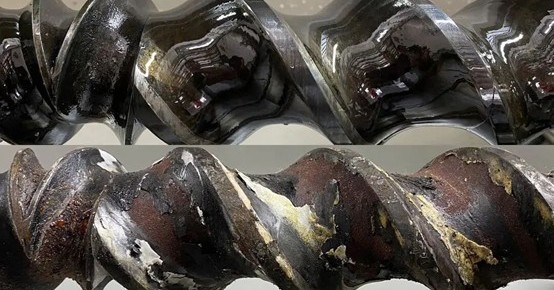
The flame rapidly heats polymer deposits, causing them to carbonize, decompose, and detach from the metal surface. High temperatures break down tough molecular chains, making the residue brittle and easy to remove.
Key Operation Tips
Clean the screw immediately after use when it still retains uniform heat.
Use a blowtorch and avoid overheating.
Keep the flame moving to prevent localized overheating.
Precautions
Never use acetylene flame: Its temperature can reach 3000°C, which permanently damages screw metallurgy.
Prevent metal structure changes: A persistent blue flame indicates irreversible metal alteration.
Avoid screw bending: Uneven heating can warp the screw.
Protect the screw material: most screws use 4140 H.T. steel with tight tolerances (≤0.03 mm) and strict straightness requirements (≤0.01 mm).
Limitations
Risk of metal damage is high, especially for inexperienced operators. Not recommended for all screw materials.
4. Water-Based Cleaning Method (Hydro-Dynamic Cleaning)
Water washing uses high-pressure, rotating water flow to remove residues. It is an environmentally friendly, efficient cleaning technique widely adopted in modern extrusion workshops.
How It Works
An automated water-washing machine applies high-pressure rotary water jets that create 360° impact coverage. The hydraulic force detaches polymer residues without damaging the screw’s mechanical precision.
Technical Advantages
Full coverage: Water jets reach tight gaps and complex geometry.
No damage: Protects screw base metal and maintains original tolerances.
Efficient: Fast cleaning cycle suitable for various polymer materials.
Eco-friendly: No chemical pollution; safer for operators.
Precautions
Assess screw material and structure for water-wash compatibility.
Adjust water pressure, temperature, and duration based on residue type.
Use equipment matched to screw length and diameter.
Dry screws promptly to prevent rust.
Dispose of wastewater properly.
Limitations
Not fully effective for extremely stubborn carbonized deposits or tight intermeshing zones of twin-screw extruders, where dead corners may remain.
How to Choose the Right Screw Cleaning Method
Selecting the best cleaning method requires evaluating:
Material being processed
Level and type of contamination
Condition of the extruder
Cleaning cost and efficiency
Required product quality
In real production, combining multiple cleaning methods often yields the best results.
Regardless of the method used, standardized operation, regular maintenance, and proper cleaning cycles are essential for:
Improving product quality
Extending screw and barrel service life
Reducing production costs
Enhancing overall efficiency
A scientific cleaning strategy ensures stable and profitable modified plastic production.

NANJING HAISI is professional manufacturer of Plastic Extruder Machine, we supply Twin Screw Extruder, Single Screw Extruder, Plastic Recycling Extruder, Two Stage Extruder, Lab Scale Extruder, Mixing and Feeding Machine, Cooling and Pelletizing Machine, Crushing Machine and so on.