Views: 14 Author: Site Editor Publish Time: 2026-03-30 Origin: Site
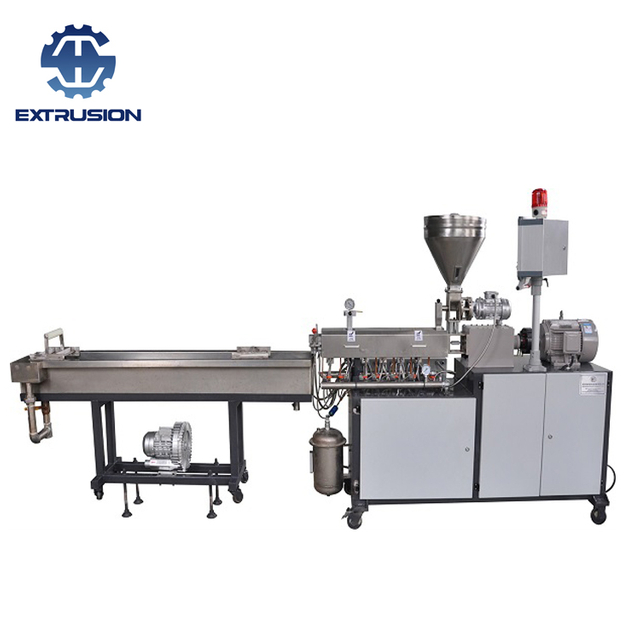
In the plastic recycling and compounding industry, the screw is universally regarded as the "heart" of the plastic pelletizing machine. Its design directly dictates the quality of the final pellets, the maximum achievable output, and the overall efficiency of your granulation line.
In a pelletizing extruder, raw materials (plastic flakes, scraps, or powders) are primarily melted (plasticized) through friction, which converts mechanical energy into thermal energy. This conversion—known as dissipation—is heavily influenced by the screw's geometry. To achieve a high melt capacity for pelletizing, the screw must generate significant friction. However, excessive friction can subject the polymer melt to intense mechanical stress, sharp temperature spikes, and material degradation before it even reaches the die face.
Therefore, the ultimate goal of Nanjing Haisi Extrusion's screw design is to strike the perfect balance between high melting capacity and gentle processing, ensuring premium pellet quality.
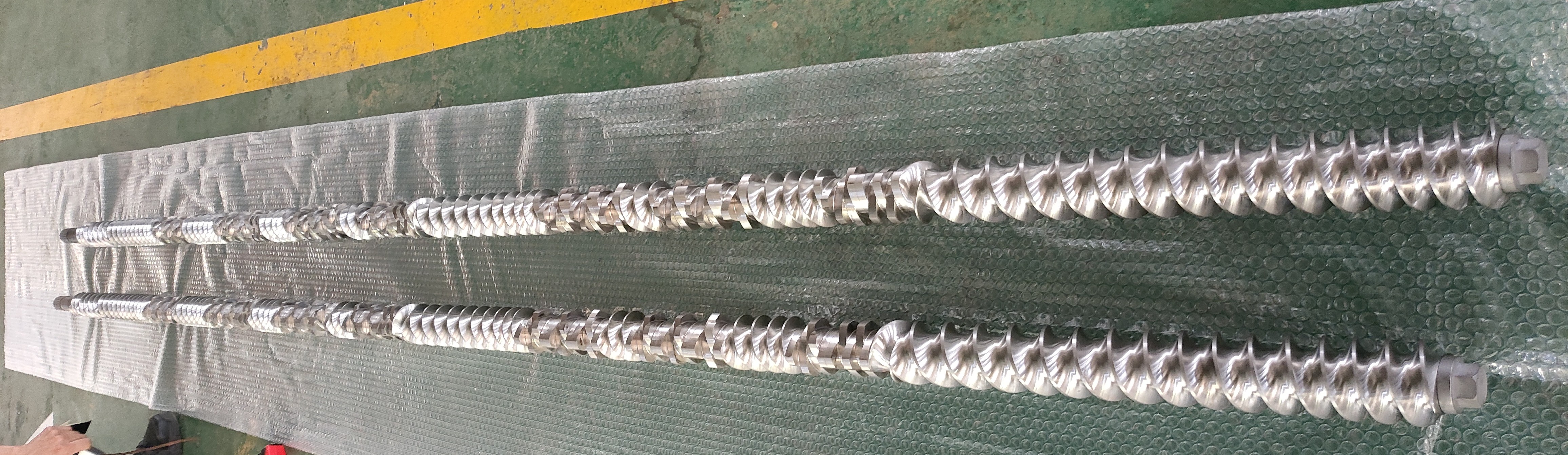
Core Objectives of a High-Performance Pelletizing Screw:
Excellent solid feeding capabilities for irregular flakes, powders, or scraps.
Smooth and stable melt conveying.
Superior plasticizing and thermal homogenization.
Optimal material blending (vital for compounding masterbatches).
Prevention of polymer degradation.
A broad processing window for different plastic grades.
Strong self-cleaning performance.
Efficient devolatilization (crucial for recycling).
To achieve these goals, different screw geometries are employed. Here are the three most critical screw designs used in modern plastic granulation:
01. The Three-Zone Screw (The Universal Pelletizing Standard)
Today, the three-zone screw is the standard configuration for most basic plastic compounding tasks. While special low-compression screws are used for shear-sensitive materials (like PVC compounding) and high-compression screws for high-crystallinity plastics, the three-zone design remains the classic, versatile workhorse in the pelletizing industry. To enhance homogenization, it is often paired with mixing elements, such as diamond or spiral shear mixers.
Design & Structure:
It consists of three distinct functional sections:
1. Feed Zone: The root diameter is small, allowing bulky materials (flakes/powders) to easily flow into the screw flights. The material is conveyed axially and compacted without intense friction.
2. Compression Zone: The root diameter gradually increases, reducing the free volume. This increases friction, builds up pressure, and drives the primary melting process.
3. Metering Zone (Output Zone): The root diameter remains constant at its maximum size. The fully melted polymer is homogenized and pumped out through the die head to be cut into uniform pellets.
Applications: General-purpose plastic compounding, masterbatch production, and processing standard polymers where extreme degassing is not required.
02. The Venting / Degassing Screw (Essential for Plastic Recycling)
When melting recycled plastics, excess volatile components—such as moisture, residual monomers, printing inks, or trapped gases—are often released. If these gases are not removed, the resulting pellets will be porous, hollow, and structurally weak. This is where specialized venting (devolatilization) extruders are mandatory.
Design & Structure:
After the initial compression zone, the venting screw features a specialized decompression area. Here, the screw root diameter suddenly decreases, dropping the internal pressure. This allows the trapped gases to be released and vacuumed out through vents in the extruder barrel. Following the vent, the screw has a second compression zone and a final metering zone to rebuild pressure before the melt is extruded into strands and cut into pellets.
Applications: Indispensable for any pelletizing process requiring the removal of volatiles, especially in post-consumer plastic recycling (e.g., granulating washed PET flakes, or damp PP/PE agricultural films).
03. The Barrier Screw (High-Yield Homogenization)
The barrier screw is currently one of the most advanced and widely used screw types for high-capacity pelletizing, processing everything from standard polyolefins to high-end engineering thermoplastics.
Design & Structure:
The defining feature of a barrier screw is an extra flight—the "barrier flight"—located in the plasticizing zone. Starting after the feed zone, this secondary flight runs with a steeper pitch and divides the screw channel into two sub-channels.
This physical separation isolates the already-melted polymer (melt pool) from the un-melted solid particles (solid bed). As the plastic melts, it flows over the slightly lower barrier flight into the melt channel, leaving the solid granules trapped in their own channel until they are fully melted.
Why is this better for pelletizing?
In a standard screw, un-melted solids float within the melt, which acts as an insulator. Heat transfer relies purely on conduction, slowing down the melting process. By separating the melt, the barrier screw allows the un-melted solids to rub directly against the heated barrel, drastically improving friction and melting efficiency.
Pros & Cons:
Pros: Delivers significantly higher plasticizing capacity and superior homogenization, ensuring no un-melted "gel particles" end up in your final pellets.
Cons: Melt temperature can be slightly harder to control, and the complex manufacturing process makes barrier screws more expensive than standard types.
Conclusion
Selecting the right screw geometry is the most critical decision when configuring a plastic pelletizing machine. Whether you are recycling damp PET flakes with a venting screw or compounding high-end engineering plastics with a barrier screw, the design must match the material to guarantee profitable, continuous production of standard-grade pellets.

As an expert manufacturer of plastic pelletizing equipment, Nanjing Haisi Extrusion Equipment Co., Ltd. custom-engineers screw configurations (including advanced twin-screw compounding setups) tailored precisely to your material and capacity needs.