Views: 10 Author: Site Editor Publish Time: 2026-08-20 Origin: Site
When polyesters like PLA and PBS are melted at high temperatures in the presence of moisture, they undergo severe hydrolytic degradation. The polymer chains break, and the molecular weight plummets, ruining the mechanical properties of the final product.
Therefore, the first rule of compounding is aggressive moisture removal. Standard operating procedures dictate that the polyester resin and the biomass fillers must be dried separately under a vacuum. For PLA, this typically means baking the material at 75–105°C for several hours. A common baseline is drying PLA at approximately 80°C for at least 12 hours. This step is non-negotiable; if you skip the dryer, your plastic pelletizing machine cannot save the formulation.

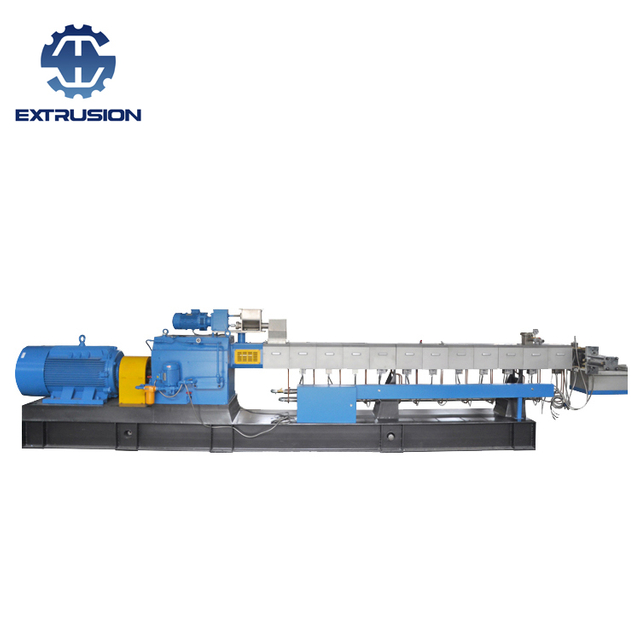
A co-rotating twin screw extruder is the ultimate mixing machinery for biomass/polyester composites. However, its two most critical parameters—screw speed (RPM) and barrel temperature—are double-edged swords that must be carefully balanced.
Increasing the screw speed significantly improves the uniform dispersion of biomass fibers within the polyester matrix, which directly enhances the flexural strength of the final pellet. However, excessively high RPM generates intense frictional shear heat inside the barrel. This thermal spike leads to the thermal degradation of the natural fibers and causes severe "fiber attrition." Research shows that pushing the RPM up to 300 can drastically reduce the tensile strength of the composite simply because the physical fibers are pulverized and broken down by the screw elements.
The barrel temperatures must be hot enough to melt the polyester, but cool enough to prevent the biomass fibers from burning. Research strictly limits the operating window between the minimum melting point of PLA (around 180°C) and the thermal degradation threshold of thermo-mechanical pulp (TMP) wood fibers (around 200°C). Operating your twin screw compounding extruder within this ultra-narrow 20°C window is the key to processing these fragile materials.
Compared to older single-screw designs, modern twin-screw technology offers a much tighter residence time distribution and more uniform heat transfer, which effectively minimizes material degradation.
A frequently overlooked detail on the factory floor is that natural fibers inevitably shorten under high shear forces during extrusion. Because this physical shortening weakens the "aspect ratio reinforcement effect" of the fibers, engineers must optimize the screw profile to minimize residence time while still achieving a perfect melt.
The primary goal of a plastic pelletizing machine is to lock in the perfect melt state and transform it into uniform, high-density pellets. These compounded pellets are the critical raw material required for all secondary forming processes downstream.
Whether the end-user intends to run the pellets through an injection molding machine at 240–280°C to make biodegradable cutlery, use a cast-film line for agricultural packaging, or thermoform the material into trays, the success of their product depends entirely on the quality of the compounded pellet. Different downstream forming methods require different temperature and shear windows, but they all share the same baseline rule: they rely on flawlessly compounded, non-degraded pellets to start with. By mastering the extrusion phase, compounding plants can guarantee maximum performance in every downstream application.

NANJING HAISI is professional manufacturer of Plastic Extruder Machine, we supply Twin Screw Extruder, Single Screw Extruder, Plastic Recycling Extruder, Two Stage Extruder, Lab Scale Extruder, Mixing and Feeding Machine, Cooling and Pelletizing Machine, Crushing Machine and so on.